
Banking Guide: How to Open an International Bank Account

International companies are corporations or limited liability companies (LLCs) formed outside the owner's country of residence. People set them up for reasons such as asset protection, business expansion, and financial privacy.
Banking systems differ widely in strength, regulation, and deposit protection. Spreading part of your funds across stable jurisdictions is a common diversification strategy, and this guide shows how to choose a bank and open an account.
Why Diversify Beyond One Country?
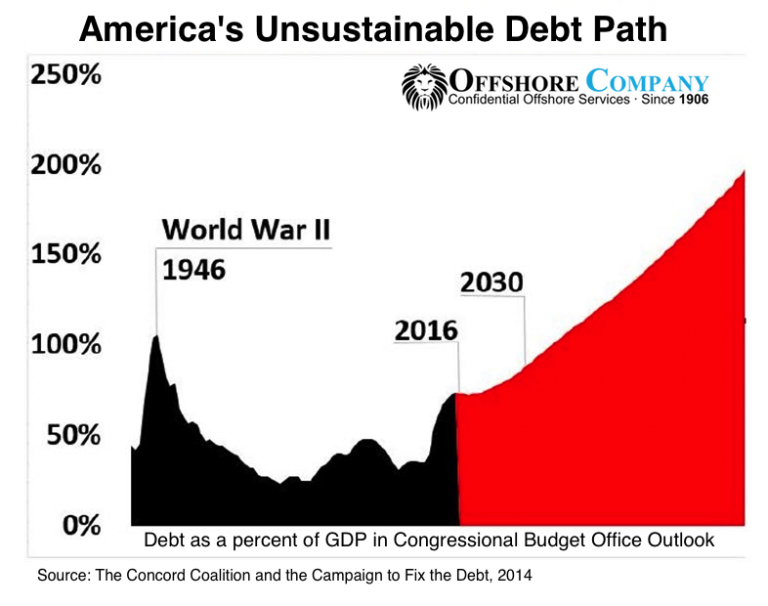
The United States has the largest national debt in the world in absolute dollar terms, and rating agencies have taken notice. Standard & Poor's downgraded the US credit rating in 2011, and other agencies have since followed with their own downgrades. For some savers, this is one reason to spread part of their funds across more than one country's banking system.
US citizens and residents are free to bank abroad. There is no law against it, though foreign accounts must be reported according to US rules.
New to international accounts? The guide below is a tutorial that covers the basics and helps you build your knowledge. To get started, call [phone number] or complete the consultation form on this page.
Banking Guide & Free Book

Chapter 1: International Bank Accounts: What They Are and Why People Open Them
Detailed information, tips, and how-tos
Chapter 2: Five Key Reasons to Open an International Account
The essentials, in brief
Chapter 3: International Banking Basics
Chapter 4: Common Myths and Misconceptions
Chapter 5: Safety and Security
Chapter 6: Asset Protection
Chapter 7: Six Leading Banking Jurisdictions
An overview of popular options
Chapter 8: Opening an International Account: Step by Step
Chapter 9: Credit Card Merchant Accounts
Chapter 10: Costs and Fees
Chapter 11: Recommended Jurisdictions
Chapter 12: Bonus Chapter: Swiss Banking, Bitcoin, and Other Cryptocurrency
Understanding Bank Risk and Deposit Insurance in the US
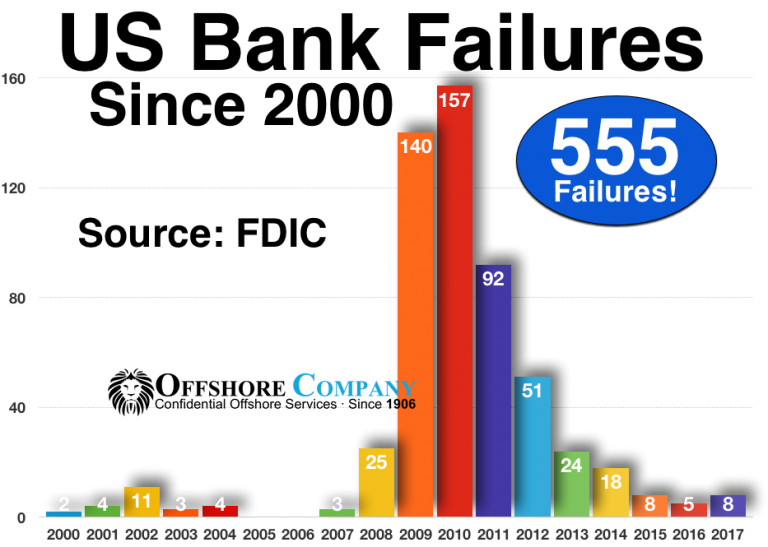
The US has one of the most heavily regulated banking systems in the world, but no banking system is risk-free. Banks can and do fail, and deposit insurance has limits.
Deposit insurance limits. The FDIC insures deposits up to $250,000 per depositor, per bank, per ownership category. Balances above that amount may not be fully protected if a bank fails. Since 2000, hundreds of US banks have failed, mostly during the 2008 financial crisis and its aftermath, and in the regional bank failures of 2023. [Insert current count and source from FDIC.gov.]
Bank stress testing. The Federal Reserve runs annual stress tests to check whether large banks hold enough capital to withstand a severe downturn. Results vary by bank and by year. [Cite the most recent results from federalreserve.gov.]
Why some savers diversify. Some people choose to hold part of their funds in more than one country's banking system to spread risk, particularly if their balances exceed insurance limits. This is a diversification choice, not a guarantee of greater safety. Foreign banks carry their own risks, and deposits abroad are generally not covered by the FDIC.
Is International Banking Safe?

Safety is the right question to ask about any bank, whether it is in the US or abroad. The answer depends on the institution, the regulator, and the deposit protection in place, not just the country.
Before choosing a bank, consider:
Spreading funds across more than one banking system can reduce reliance on any single institution. It does not remove risk, because every banking system has its own.
Why Deposit Insurance Limits Matter

Most of us grew up believing a bank was the safest place for our money, and for most depositors, most of the time, that holds true. Deposit insurance is a big reason why. But it has limits worth understanding.
The FDIC insures deposits up to $250,000 per depositor, per bank, per ownership category. Balances above that amount may not be fully protected if a bank fails. Bank failures are uncommon, but they do happen. According to FDIC records, hundreds of US banks failed between 2000 and 2018, most of them during the 2008 financial crisis and its aftermath. More recently, several large regional banks failed in 2023. [Insert current figures and source from FDIC.gov, with the date.]
Washington Mutual, which failed in 2008, remains the largest bank failure in US history by assets. Its deposits were transferred to another bank, so depositors kept access to their funds. Outcomes in other failures have varied, which is why many people with larger balances review how their money is spread across institutions.
For this reason, depositors with larger balances often review how their funds are distributed across institutions and ownership categories.
For some savers, that review includes holding part of their funds in more than one country's banking system. Foreign banks carry their own risks, and deposits abroad are generally not covered by the FDIC.
Considering an International Account

Many savers choose to hold part of their funds outside their home country as a way to diversify. If your balances are significant, or you want access to more than one banking system, it may be worth exploring your options.
Our team can help you compare jurisdictions, understand the due diligence process, and open an international account that fits your goals. Call [phone number] or complete the consultation form on this page to get started.
How to Choose a Jurisdiction

When comparing jurisdictions, look for a strong financial position, political stability, and a long-established financial services industry. A jurisdiction's track record matters more than its marketing, so consider how its laws and institutions have actually performed over time. A reputation for financial stability, built over many years, is one of the most reliable signals.
A few practical factors to weigh:
What International Banking Is Really About

Holding funds abroad is about diversification, not avoiding taxes. Opening an international account does not by itself change your tax liability, but the interest and income it earns remain taxable and reportable in your home country. Taxpayers in the US, UK, and many other countries are taxed on worldwide income and must disclose foreign accounts under their local rules.
Thanks to online banking, wire transfers, telephone banking, and debit cards, managing an international account is not very different from banking locally.
Why Look Beyond Your Local Bank?

Your local bank is unlikely to advertise that another bank, in another country, may offer a higher interest rate. Foreign banks that don't hold a local banking license are generally restricted in how they can market to residents of other countries, so many people never hear about their options.
That is where we come in. We help clients learn which international banks accept foreign customers, compare rates, services, and fees, and decide whether holding part of their funds abroad makes sense for them. Rates and terms vary by bank and change over time, and a higher rate does not always mean a better or safer account.
Leading Banking Centers

Switzerland, Germany, Australia, Singapore, Hong Kong, and several other countries are home to well-capitalized, well-regulated banks with long track records. Not every bank in these countries accepts foreign clients, and the ones that do vary widely in minimum deposits, services, and fees.
Our team helps you identify institutions that accept international customers, offer investment options, and match your needs for stability, convenience, and service quality. We recommend reviewing each bank's regulator, capitalization, and deposit protection before you decide.
Get Experienced Guidance

Opening an international account is a significant decision, and it helps to have someone with experience in the process. Any bank can present itself well, but an experienced advisor can help you evaluate regulation, capitalization, fees, service quality, and how each institution treats foreign clients.
Our team has helped many clients open international accounts and can match your needs with suitable institutions. Our fees are typically modest compared with the cost of choosing the wrong bank.
Common Questions About International Accounts

Many people are unsure about the rules around holding money abroad, and some of what circulates online is incomplete or inaccurate. Here are the basics:
If you are a US taxpayer, foreign accounts may need to be disclosed through filings such as the FBAR and FATCA Form 8938. If you're unsure what applies to you, speak with a tax professional who specializes in international matters.
What Are My Options?

International banks vary widely in who they serve and what they offer. Common categories include:
Minimum deposits range from around $2,000 at some banks to $250,000 or more at private banks serving high-net-worth clients. Interest rates also vary. Some banks pay more than domestic banks, while others pay comparable rates. Certain jurisdictions, such as the Cook Islands, limit the recognition of foreign judgments, which some clients find relevant when combined with an appropriate trust structure.
What to Expect When Applying
Banks worldwide follow strict due diligence and "know your customer" rules. Expect to fully disclose your identity and document the source of your funds. Banks will decline applicants who appear to be trying to evade taxes in their home country, so come prepared with complete documentation.
Opening an Account Remotely
All banks require proper identification. Some accept documents by mail, while others require an in-person visit. Through our relationships with banks around the world, we act as an eligible introducer and can help clients open accounts remotely, where the bank permits it.
Many international banks do not accept clients from the US or Canada. We can help you identify institutions that do accept foreign clients, so you can avoid applications that are likely to be declined.
Have questions about opening an account from abroad? Call [phone number] or complete the form on this page.